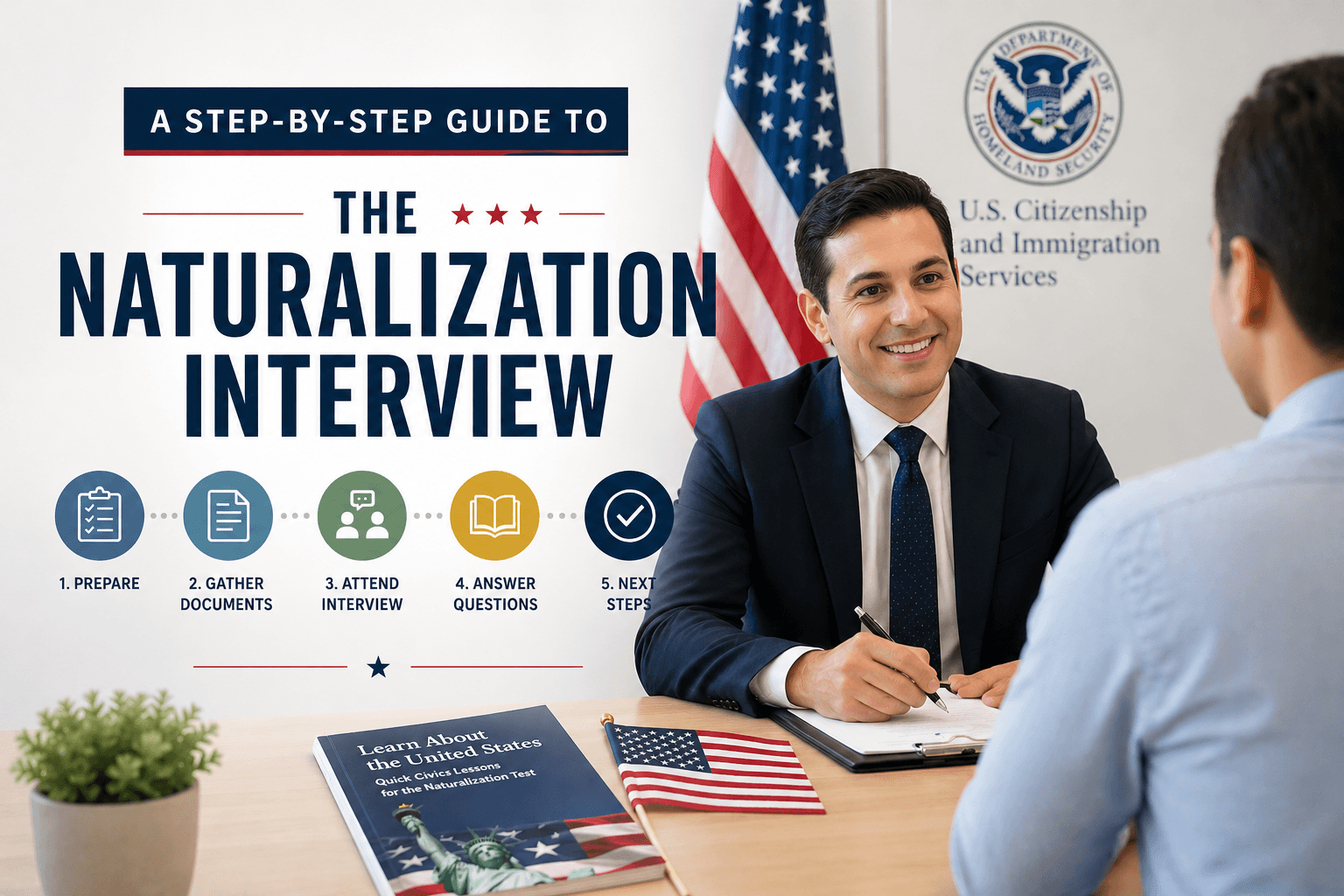
A Step-By-Step Guide to the Naturalization Interview
 projectnewyorker
Becoming a naturalized citizen in the United States is a life-changing journey. The naturalization interview is a key step in this process. It can feel intimidating, especially for non-native English speakers. Many people worry about the questions, the English test, and the outcome. But with the right preparation, you can approach your interview with confidence.
This article breaks down the naturalization interview step by step. You’ll learn what to expect, how to prepare, and what happens after the interview. We’ll cover everything from paperwork to the civics test, using clear, simple English. If you’re planning for your interview, or helping someone else, this guide will help you avoid common mistakes and understand the process fully.
What Is The Naturalization Interview?
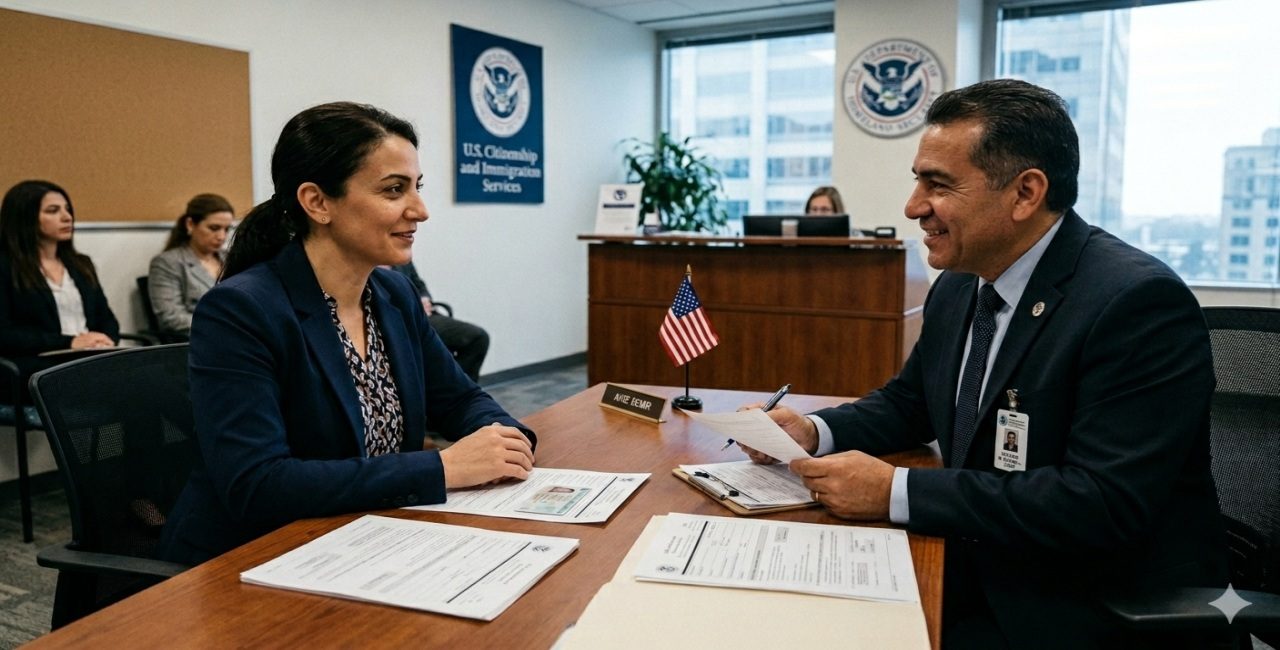
The naturalization interview is a meeting with a USCIS (U.S. Citizenship and Immigration Services) officer. It usually happens at a local USCIS office. The interview is your chance to show you meet all requirements for U.S. citizenship.
During the interview, the officer will:
- Review your N-400 application
- Ask questions about your background
- Test your English reading, writing, and speaking skills
- Give you the civics test (U.S. history and government)
You must pass this interview to become a U. S. citizen.
Why Is The Interview Important?
The interview is important because it:
- Confirms you are eligible for citizenship
- Checks your honesty and ability to follow the law
- Tests your knowledge of U.S. history and government
- Measures your English skills
If you pass the interview and tests, you will move to the final step: the oath ceremony.
Preparing For Your Naturalization Interview
Preparation is the key to success. Many people make simple mistakes because they don’t prepare well. Let’s look at what you need to do before your interview.
Review Your N-400 Application
Before your interview, review your N-400 form carefully. The officer will ask questions from this form. Make sure:
- All answers are correct and match your documents
- You remember important dates (marriage, travel, arrests, etc.)
- You can explain any changes since you applied
If you made mistakes or your situation changed, bring updated documents.
Gather Required Documents
The USCIS will send you a notice with a list of documents to bring. Common documents include:
- Permanent Resident Card (Green Card)
- State-issued ID (driver’s license)
- Passports (current and expired)
- Marriage, divorce, or birth certificates (if needed)
- Evidence of military service (if applicable)
- Tax returns and proof of income
- Selective Service registration (if required)
- Any court documents (if you had legal issues)
Missing documents can delay your application. Double-check the list and gather everything.
Practice English And Civics
You will be tested on:
- English speaking (answering questions)
- English reading (reading a sentence)
- English writing (writing a sentence)
- Civics knowledge (U.S. history and government)
Practice these skills daily. Use sample questions from the USCIS website. Ask friends or family to quiz you. Remember, you do not need perfect English, but you must understand and answer simple questions.
Check Interview Location And Time
Your interview notice will include the date, time, and place. Plan your travel. Arrive at least 30 minutes early. If you are late or miss your interview, you may have to reschedule, which delays your application.
Dress Appropriately
Wear clean, neat clothing. You do not need formal clothes, but avoid shorts, flip-flops, or t-shirts with slogans. Your appearance should show respect for the process.
Arriving At The Uscis Office
Arriving early helps you feel calm and prepared. Here’s what to expect when you enter the USCIS office.
Security Check
You must pass through a security screening. Officers will check your ID and scan your bag. Do not bring weapons or anything dangerous.
Waiting Room
After security, you go to the waiting area. You may wait for a while before your name is called. Use this time to review your documents and relax.
Interview Room
A USCIS officer will call your name and lead you to a private room. The interview usually takes 20–40 minutes. Sometimes it can be longer, especially if your case is complex.
Step-by-step Breakdown Of The Interview
Let’s walk through the interview in detail. Understanding each step helps you stay calm and avoid mistakes.
Step 1: Oath Of Honesty
The officer will ask you to stand and take an oath. You promise to tell the truth during the interview. Lying can lead to denial or legal trouble.
Step 2: Review Of N-400 Application
The officer will go through your N-400 form line by line. They may ask:
- Your full name and any name changes
- Address and phone number
- Family details (spouse, children)
- Employment history
- Travel outside the U.S. in the past 5 years
- Criminal history or legal issues
If something has changed since you submitted the application, explain clearly and provide supporting documents.
Common Mistakes In N-400 Review
- Forgetting dates: Many applicants forget dates of travel or marriage.
- Inconsistent answers: Answers that don’t match your documents raise red flags.
- Not reporting changes: Always report new marriages, divorces, or legal issues.
Step 3: English Speaking Test
The officer will ask you simple questions in English. They want to see if you can understand and answer. Questions may include:
- “Why do you want to become a U.S. citizen?”
- “Where do you live?”
- “What is your job?”
Speak clearly. If you don’t understand a question, ask politely for the officer to repeat.
Step 4: English Reading Test
You will be asked to read a sentence in English. Examples:
- “Who is the President of the United States?”
- “Where is the White House?”
Practice reading aloud before your interview.
Step 5: English Writing Test
You must write a simple sentence. The officer will say the sentence, and you write it. Examples:
- “The President lives in the White House.”
- “Citizens can vote.”
The officer will check your spelling and grammar, but minor mistakes are okay.
Step 6: Civics Test
The civics test is a key part of the interview. You must answer up to 10 questions about U. S. history, government, and rights. You need to get at least 6 correct to pass.
Example Civics Questions
- “What is the supreme law of the land?”
- “Who was the first President of the United States?”
- “What are two rights of everyone living in the United States?”
Study the official list of 100 questions. The officer will choose questions at random.
Civics Test Table
Here’s a quick comparison of the civics test formats:
| Test Section | Number of Questions | Passing Score | Content |
|---|---|---|---|
| Civics Oral Test | 10 | 6 correct | U.S. history and government |
| English Reading Test | 1 | 1 correct | Read a sentence aloud |
| English Writing Test | 1 | 1 correct | Write a sentence |
Step 7: Final Questions And Decision
At the end, the officer may ask a few final questions. They will let you know if you passed the interview. Sometimes, they need more documents or time to review your case. If so, you may get a letter later.
Credit: akalanlaw.com
What Happens After The Interview?
After your interview, there are three possible outcomes:
- Approval: You pass the interview and tests. The officer recommends you for citizenship.
- Continued: The officer needs more documents or information before making a decision.
- Denial: You do not meet requirements, or you fail the tests.
Most applicants get a decision within a few weeks.
Oath Ceremony
If you are approved, you will receive a notice for the oath ceremony. Here, you will:
- Swear loyalty to the United States
- Receive your Certificate of Naturalization
- Become a U.S. citizen
Dress neatly and bring your green card and ceremony notice.
If Your Case Is Continued
If the officer needs more documents, you will get a Request for Evidence (RFE). Send the requested documents as soon as possible. Your case will continue once USCIS receives the documents.
If You Fail The Tests
If you fail the English or civics test, you can retake the failed part. USCIS will schedule a new interview within 60–90 days. You get two chances per application.
Common Mistakes And How To Avoid Them
Many applicants make mistakes that delay or hurt their chances. Let’s look at key mistakes and how to avoid them.
1. Not Reviewing N-400 Answers
Small errors in your N-400 can cause big problems. Review your answers before the interview. Bring proof for any changes.
2. Bringing Incomplete Documents
Forgetting important documents is a common issue. Make a checklist and double-check before you leave.
3. Poor English Preparation
Even basic English is required. Practice speaking, reading, and writing. Use USCIS materials and ask a friend to help.
4. Not Understanding Civics Questions
Study the 100 official questions. Don’t just memorize answers—try to understand the meaning.
5. Arriving Late
Arriving late may force you to reschedule. Plan your route and leave early.
6. Getting Nervous And Forgetting Answers
It’s normal to feel nervous. Practice deep breathing. Remember, the officer is not trying to trick you—they want you to succeed.
7. Giving False Information
Never lie or guess. If you don’t know an answer, explain honestly.
Special Cases: Waivers And Exceptions
Some applicants have special situations. USCIS may offer waivers for the English or civics test.
Age And Disability Exceptions
- If you are over 50 years old and have lived in the U.S. as a permanent resident for at least 20 years, you may take the civics test in your native language.
- If you are over 55 years old and have lived in the U.S. as a permanent resident for at least 15 years, you may also use your native language.
- If you have a medical disability that prevents you from learning English or civics, you can request an exception using Form N-648.
Table Of Eligibility For Exceptions
| Situation | English Test | Civics Test | Requirement |
|---|---|---|---|
| Age 50, 20 years residency | Required | Native language allowed | Permanent resident for 20 years |
| Age 55, 15 years residency | Required | Native language allowed | Permanent resident for 15 years |
| Medical disability | May be waived | May be waived | Form N-648 required |
Real-life Example: Maria’s Interview Journey
Let’s look at a real-life example. Maria, from Mexico, applied for naturalization after living in the U. S. for 12 years.
Maria prepared by:
- Reviewing her N-400 with her lawyer
- Practicing civics questions with her children
- Using English apps to improve her speaking
- Gathering all documents weeks before
At her interview, Maria was nervous but honest. She answered questions about her travel history. She passed the English and civics tests. The officer approved her, and Maria attended her oath ceremony two weeks later.
Maria’s story shows the importance of preparation and honesty. Even if you are nervous, practice and support can help you succeed.
Practical Tips For Naturalization Interview Success
Here are some tips from experienced applicants and immigration experts:
- Study with others: Group study helps you remember answers.
- Use official materials: USCIS provides free study guides and sample questions.
- Practice interviews: Ask someone to play the officer and ask you questions.
- Organize your documents: Use folders and labels for easy access.
- Know your rights: You can ask for an interpreter if allowed by your situation.
- Stay calm: Officers are trained to help you. Take your time with answers.
- Follow up: If you don’t hear back after the interview, check your case status online.
Understanding The Civics Test In Depth
Many applicants worry about the civics test. Let’s dive deeper into what you need to know.
Types Of Questions
Questions cover topics like:
- The Constitution
- The branches of government
- Rights and responsibilities
- U.S. history (important events and figures)
- States and geography
Sample Civics Questions And Answers
Here are five sample questions with correct answers:
- What is the supreme law of the land?
- The Constitution
- Who was the first President of the United States?
- George Washington
- What are two rights of everyone living in the United States?
- Freedom of speech and freedom of religion
- Who makes federal laws?
- Congress
- What did the Declaration of Independence do?
- Announced our independence from Great Britain
Civics Test Pass Rates
According to USCIS, over 90% of applicants pass the civics test on their first try. This shows that careful preparation works.
Comparison Table: Civics Test Vs. English Test
| Aspect | Civics Test | English Test |
|---|---|---|
| Purpose | Knowledge of U.S. history and government | Ability to speak, read, write English |
| Format | Oral questions | Oral, written, reading |
| Passing Criteria | 6 out of 10 correct | 1 correct for reading, 1 correct for writing |
| Exemptions | Age, disability waivers | Age, disability waivers |
What To Do If You Need Legal Help
Some cases are more complicated. If you have criminal history, immigration violations, or need waivers, consider talking to a qualified immigration lawyer. They can help you:
- Review your application
- Prepare for complex questions
- Submit extra documents
- Protect your rights
Be careful when choosing a lawyer. Use only licensed attorneys or accredited representatives. Avoid scams or “notarios” who offer fake services. You can find trusted lawyers through the American Immigration Lawyers Association (AILA).
How Covid-19 Changed The Interview Process
Since the COVID-19 pandemic, USCIS made changes for health and safety:
- Masks may be required
- Social distancing in waiting rooms
- Fewer people allowed in the office
- Some interviews may be rescheduled for illness
Check the latest USCIS guidelines before your interview.
Non-obvious Insights For Applicants
- Practice listening to different accents: Officers may have different regional accents. Listening to varied English speakers helps you understand questions better.
- Don’t memorize answers word-for-word: Understanding the meaning of civics questions is more important than reciting exact words. Officers may ask questions in different ways.
- Bring extra copies of documents: Sometimes, the officer asks for a copy to keep. Having extras avoids delays.
Useful Resources
For official study materials, visit the USCIS website. They offer free guides, sample questions, and videos. For more tips, check the USCIS Citizenship Resource Center.
Frequently Asked Questions
How Long Does The Naturalization Interview Take?
Most interviews last 20–40 minutes. Complex cases may take longer. Arrive early and be patient.
What Happens If I Fail The English Or Civics Test?
You can retake the part you failed within 60–90 days. You get two chances per application.
Can I Bring Someone With Me To The Interview?
Usually, only the applicant is allowed. Exceptions are made for disabilities or if you need an interpreter (with prior approval).
What Should I Do If My Address Or Situation Changes After Applying?
Update your information with USCIS as soon as possible. Bring proof of changes to your interview.
How Soon After The Interview Will I Become A Citizen?
If you are approved, you may be scheduled for the oath ceremony within a few weeks. After the ceremony, you receive your Certificate of Naturalization and become a citizen.
Becoming a U. S. citizen is a proud achievement. The naturalization interview is an important step, but with careful preparation and honest answers, you can succeed. Remember to study, gather your documents, and practice English daily. Support from friends, family, or legal experts can make the journey easier.
Good luck on your path to citizenship!