How to Apply for Disability Benefits in New York
 projectnewyorker
Are you struggling with a disability and unsure how to get the financial help you need in New York? Applying for disability benefits can feel overwhelming and confusing, but you don’t have to face it alone.
This guide will walk you through each step, making the process simple and clear. By the end, you’ll know exactly what to do to increase your chances of approval and secure the support you deserve. Keep reading to take control of your future and find the assistance that’s waiting for you.
Eligibility Criteria
Applying for disability benefits in New York requires meeting specific eligibility criteria. These rules help determine who qualifies for financial support due to a disability. Understanding the key requirements can make the application process smoother. The main areas to consider are medical conditions, residency and work history, and age and employment status. Each plays a crucial role in deciding eligibility for benefits.
Medical Requirements
New York disability benefits focus heavily on your medical condition. You must have a medical condition that prevents you from working. The condition must be severe enough to stop you from doing any substantial gainful activity. This means you cannot earn enough money through work due to your disability.
The medical condition must meet one or more of these:
- Expected to last at least 12 months
- Result in death
- Be proven by medical records and doctor reports
Some common qualifying conditions include:
| Type of Disability | Examples |
|---|---|
| Physical | Paralysis, amputation, severe arthritis |
| Mental | Depression, schizophrenia, anxiety disorders |
| Chronic Illness | Diabetes, heart disease, cancer |
Medical evidence is key. This includes doctor’s notes, hospital records, test results, and treatment history. Consistent documentation strengthens your case.
Residency And Work History
Eligibility depends on where you live and your work background. You must live in New York State to apply for state disability benefits. Proof of residency like a driver’s license, lease, or utility bill is often required.
Your work history also matters. You need to have worked and paid into the state’s disability insurance program. This means you must have earned wages covered under New York’s Disability Benefits Law (DBL) for a certain period.
Key points about work history include:
- You must have worked for a covered employer
- You need recent work history, usually within the last 4 to 5 years
- Employment must have been for a minimum number of weeks
Check your pay stubs or ask your employer to confirm if your job is covered. Self-employed individuals may have different rules and might need private disability insurance.
Age And Employment Status
Your age and current job status affect eligibility. There is no strict age limit, but the condition must stop you from working regardless of your age. Disability benefits support adults and younger workers alike if they meet other criteria.
Employment status rules are clear:
- You must be actively employed or recently employed to qualify
- If unemployed for a long time, you may not qualify
- Temporary and part-time workers can apply if they meet work history rules
Applicants who are retired or already receiving Social Security Disability Insurance (SSDI) may face different eligibility rules. It is important to confirm your employment status and income level before applying.
Credit: www.nyhealthinsurer.com
Types Of Disability Benefits
Applying for disability benefits in New York involves understanding the different types of benefits available. Each program has its own rules, eligibility requirements, and benefits. Knowing the right program to apply for can save time and increase the chances of approval. This section explains the main types of disability benefits offered in New York to help you decide which one fits your situation best.
Social Security Disability Insurance
Social Security Disability Insurance (SSDI) is a federal program for people who have worked and paid Social Security taxes. It offers financial help to those who cannot work due to a medical condition expected to last at least one year or lead to death.
Key points about SSDI:
- You must have earned enough work credits, usually from recent jobs.
- The disability must meet the Social Security Administration’s strict medical standards.
- Benefits can include monthly payments and Medicare health coverage after two years.
The application process involves:
- Filling out an online or paper application.
- Providing medical records and work history.
- Waiting for a decision, which can take several months.
| SSDI Feature | Details |
|---|---|
| Eligibility | Work history and medical condition |
| Monthly Benefit | Varies based on earnings |
| Health Coverage | Medicare after 24 months |
SSDI is best for those with a strong work history and a long-term disability.
Supplemental Security Income
Supplemental Security Income (SSI) provides money to disabled people with limited income and resources. SSI does not depend on work history. Instead, it focuses on financial need.
Important facts about SSI:
- Applicants must have low income and assets below a certain limit.
- Disability must meet the Social Security Administration’s medical rules.
- SSI also offers Medicaid health coverage in New York.
The application steps include:
- Submitting an application online or at a Social Security office.
- Providing proof of income, resources, and medical condition.
- Waiting for a decision, which can take several months.
| SSI Feature | Details |
|---|---|
| Eligibility | Low income and limited resources |
| Monthly Benefit | Standard federal amount, may vary |
| Health Coverage | Medicaid in New York |
SSI helps those without enough work history or financial support to meet their basic needs.
State-specific Programs
New York offers additional disability benefits to support residents. These state-specific programs provide extra help with income, health care, and services.
Main state programs include:
- New York State Disability Benefits Law (DBL): Pays partial wage replacement for short-term disabilities caused by illness or injury.
- Home Care Services: Offers in-home support for disabled individuals to live independently.
- Medicaid Waivers: Provides funding for community-based care instead of nursing homes.
Here is a summary of key state programs:
| Program | Description | Benefit |
|---|---|---|
| Disability Benefits Law (DBL) | Short-term wage replacement | Up to 50% of wages for up to 26 weeks |
| Home Care Services | In-home support and assistance | Help with daily living tasks |
| Medicaid Waivers | Community-based care funding | Long-term care alternatives |
These programs work alongside federal benefits. They fill gaps and offer tailored support for New York residents.
Application Process
Applying for disability benefits in New York requires a clear understanding of the application process. This process ensures the state reviews your claim fairly and quickly. Each step is important to avoid delays or denial. Knowing what to expect can reduce stress and help you prepare properly.
Gathering Necessary Documents
Before starting your application, collect all required documents. These papers prove your identity, work history, and medical condition. Missing documents can slow down your claim or cause it to be rejected.
Essential documents include:
- Proof of identity: Driver’s license, state ID, or passport
- Medical records: Doctor’s reports, test results, hospital visits
- Work history: Pay stubs, W-2 forms, employment records
- Social Security number or card
- Bank details for direct deposit of benefits
Organize these documents in a folder or digital file. This way, you can access them quickly when filling out the application. Keep copies of everything you send to the Social Security Administration (SSA). It’s helpful to track your submission and follow up if needed.
| Document Type | Purpose | Where to Get It |
|---|---|---|
| Proof of Identity | Confirm who you are | Department of Motor Vehicles or Passport Office |
| Medical Records | Show your disability condition | Your doctor or hospital |
| Work History | Verify your employment and earnings | Employer or IRS |
Filling Out The Application
The application form asks about your personal details, health, and work history. Answer all questions clearly and honestly. Incomplete or incorrect answers can delay your claim.
Use these tips to complete the form:
- Read instructions carefully before starting.
- Write clearly or type your answers.
- Provide detailed information about your disability.
- Include dates for medical visits and treatments.
- Check your answers before submitting.
Many people find it easier to fill out the application online via the SSA website. Online submission offers step-by-step help and saves time. Paper forms are available at local SSA offices or by mail.
Keep a copy of your completed application. This helps if you need to review or correct information later.
Submitting Your Claim
After completing the application, submit it to the SSA. Choose the best submission method for you. Options include online, by mail, or in person at an SSA office.
Important submission tips:
- Double-check your documents and application form.
- Keep proof of submission like confirmation emails or receipts.
- Submit before deadlines to avoid delays.
- Use certified mail if sending by post.
The SSA will review your claim and may contact you for more information. Stay reachable and respond quickly to requests. You can track your claim status online or by phone.
Submitting your claim correctly increases your chances of quick approval. Stay organized and patient during this process.
Credit: www.fbrlaw.com
Medical Evidence And Documentation
Applying for disability benefits in New York requires strong medical evidence and documentation. This proof shows the severity of your condition and supports your claim. Medical evidence includes reports, test results, and a clear medical history. Gathering and organizing these documents carefully can improve your chance of approval. The Social Security Administration (SSA) relies on detailed and consistent medical information to understand your health status. Accurate documentation helps prove that your disability limits your ability to work.
Doctor’s Reports
Doctor’s reports are key to your disability claim. These reports explain your diagnosis, symptoms, and how your condition affects daily life. Your doctor should provide a clear and detailed description of your illness or injury. These reports often include:
- Diagnosis and date of onset
- Current symptoms and their severity
- Treatment history and response
- Prognosis or expected course of the illness
- Physical or mental limitations caused by the condition
Tips for obtaining strong doctor’s reports:
- Schedule regular appointments to update your doctor on your condition.
- Ask your doctor to write detailed notes about your ability to work.
- Request copies of all reports for your records.
Doctors who specialize in your condition can provide more persuasive reports. Ensure your reports clearly connect your medical condition to your disability claim. Well-prepared reports reduce delays and help SSA understand your health problems better.
Medical Tests And Records
Medical tests and records provide objective proof of your condition. These documents include lab results, imaging scans, and hospital records. They support the information in your doctor’s reports. Collecting all relevant tests is important to show the extent of your disability.
Common medical tests used in disability claims:
| Type of Test | Purpose | Example |
|---|---|---|
| Blood Tests | Check for infections or chronic diseases | Complete blood count (CBC) |
| X-rays and MRI | Show bone or soft tissue damage | MRI of the spine |
| Psychological Evaluations | Assess mental health disorders | Depression screening |
| Functional Capacity Tests | Measure physical or mental work ability | Walking endurance tests |
Organize your medical records by date and type. Keep copies of all test results. This organization helps the SSA review your file quickly. Always include recent tests to show your current health status.
Consistency In Medical History
Consistency in your medical history is critical for disability approval. Your records, reports, and statements must align without contradictions. Inconsistent information can raise doubts about your claim’s validity.
Ways to maintain consistency:
- Provide accurate dates for symptoms and treatments.
- Describe your symptoms clearly and similarly in all documents.
- Update your medical providers about changes in your condition.
- Keep your own notes or diary of symptoms and daily limitations.
Inconsistent medical history may cause delays or denials. The SSA compares your statements with medical records to check reliability. Matching information shows honesty and strengthens your case.
Below is a checklist to ensure consistency:
| Item | Action |
|---|---|
| Symptom Description | Use same wording across reports and forms |
| Dates of Treatment | Confirm correct dates with medical providers |
| Medication List | Keep updated list and share with doctors |
| Functional Limitations | Describe limits consistently in all documents |
After Applying
After submitting your application for disability benefits in New York, the process enters a new phase. This stage is crucial because your case will be reviewed, and you may need to provide extra information. Staying patient and organized can help you move through this phase smoothly. Understanding what happens after applying will prepare you for the next steps and reduce stress during the waiting time.
Waiting Period
The waiting period begins once your application is submitted. This time allows the Social Security Administration (SSA) to review your documents and medical records. The length of this period can vary, but it usually takes between 3 to 5 months. During this time, SSA may contact your doctors or ask for more details about your condition.
Key points about the waiting period:
- SSA reviews your medical history and work records.
- It may take longer if your case is complex or needs extra evidence.
- You will receive updates by mail about your application status.
- Prepare for possible delays by keeping all medical documents ready.
The following table shows a rough timeline of what to expect:
| Time Frame | Action | What You Should Do |
|---|---|---|
| 0-2 Months | Initial Review | Wait and prepare any additional documents |
| 2-4 Months | Request for More Information (if needed) | Respond quickly to requests |
| 4-6 Months | Decision Made | Receive approval or denial letter |
Responding To Requests
During the review, SSA might ask for more information. This could include medical reports, proof of income, or other documents. Responding quickly and fully is important. Delays or missing information can slow down your case or even cause denial.
Tips for responding to SSA requests:
- Read all letters carefully to understand what is needed.
- Gather all requested documents promptly.
- Keep copies of everything you send.
- Use certified mail or another trackable method to send documents.
- Contact SSA if you have questions about the request.
Missing deadlines can hurt your chances. SSA usually gives about 10 to 30 days to respond. Use this time wisely. Organize your papers and ask your doctor for updated medical statements if needed.
Attending Hearings
If SSA denies your claim, you have the right to ask for a hearing. This hearing gives you a chance to explain your situation in person. An administrative law judge will listen to your case and review all evidence.
What to expect at the hearing:
- The judge asks questions about your disability and work history.
- You can bring a lawyer or representative to help.
- Medical experts or witnesses may be called to support your claim.
- The hearing usually lasts 30 to 60 minutes.
- You will get a decision weeks or months later.
Preparing for the hearing is key. Gather all medical records and proof of how your condition affects daily life. Practice explaining your disability clearly. Remember, this is your chance to make a strong case.
Appealing A Denial
Applying for disability benefits in New York can be a complex process. Many applicants face denials at first. Knowing how to appeal a denial is crucial. The appeal process gives you a second chance to prove your eligibility. Acting quickly and correctly can improve your chances of success. Understanding why denials happen and the steps to appeal helps you prepare better.
Reasons For Denial
Disability benefit claims are often denied for several reasons. Understanding these reasons helps you avoid common mistakes. The most frequent causes of denial include:
- Insufficient medical evidence: Your records may lack detailed proof of your disability.
- Non-severe condition: The disability might not meet the required severity to qualify.
- Work activity: Evidence that you can still work or perform certain tasks.
- Incomplete application: Missing forms, signatures, or important documents.
- Late filing: Submitting your claim or evidence after deadlines.
Here is a summary table of common denial reasons:
| Reason | Description |
|---|---|
| Medical Evidence | Insufficient or outdated medical records. |
| Severity of Condition | Disability not severe enough under guidelines. |
| Work Activity | Applicant still able to perform some work tasks. |
| Application Errors | Missing forms or incomplete information. |
| Timeliness | Claim or evidence submitted after deadline. |
Review your denial letter carefully. It often states the exact reason for refusal. Use this information to prepare your appeal.
Filing An Appeal
After receiving a denial, you have the right to file an appeal. This process must follow specific steps and deadlines. Acting quickly is important. The general appeal process includes:
- Request reconsideration: Ask the agency to review your case again. This is the first step.
- Hearing before an administrative law judge: If reconsideration is denied, request a hearing. You can present new evidence and explain your case.
- Appeal to the Appeals Council: If the hearing decision is unfavorable, ask for a review by the Appeals Council.
- Federal court review: As a last step, you may file a lawsuit in federal court.
Here are important tips for filing an appeal:
- File your appeal within 60 days of the denial date.
- Submit all required forms and documents on time.
- Gather new medical evidence or statements if possible.
- Keep copies of all paperwork for your records.
Use the official forms provided by the Social Security Administration or New York State Disability office. Missing or incorrect forms can delay the process.
Legal Assistance
Many applicants find the appeal process confusing and stressful. Legal help can improve your chances of success. Lawyers and advocates know the rules and deadlines. They guide you through the paperwork and hearings.
Here is how legal assistance can help:
- Case evaluation: Lawyers review your denial and find weak points.
- Evidence gathering: They help collect medical records and expert opinions.
- Form preparation: Ensure all appeal forms are correctly filled and submitted on time.
- Representation at hearings: Lawyers speak for you in front of judges.
- Follow-up: Track your case and respond to requests quickly.
In New York, many disability attorneys work on a contingency fee basis. This means they get paid only if you win your case. Free legal aid organizations also offer help for low-income applicants.
Getting legal support does not guarantee approval but greatly increases your odds. Consider consulting a lawyer early in the appeal process for better results.
Additional Resources
Applying for disability benefits in New York can be complex and stressful. Many applicants need extra help to understand the process and complete paperwork correctly. Additional resources provide valuable support, guidance, and information to make the application easier. These resources include local advocacy groups, legal aid services, and online tools that offer assistance at every step.
Local Advocacy Groups
Local advocacy groups play a key role in helping people apply for disability benefits. These organizations offer personalized support and can explain the application steps in simple terms. They often provide free workshops, one-on-one counseling, and help with gathering medical records.
Here are some ways local advocacy groups assist applicants:
- Explain eligibility requirements clearly
- Help complete and submit application forms
- Provide advice on medical documentation
- Offer support during appeal processes
- Connect applicants with community services
Many groups focus on specific disabilities or populations, like veterans, seniors, or people with chronic illnesses. Visiting a local advocacy group can reduce confusion and improve chances of approval.
| Advocacy Group | Focus Area | Services Offered |
|---|---|---|
| Disability Rights New York | General Disability Rights | Legal help, advice, advocacy |
| New York State Independent Living Council | Independent Living Support | Information, peer support, resources |
| Veterans Disability Benefits Clinic | Veterans | Application assistance, appeals |
Legal Aid Services
Legal aid services provide expert help for disability benefit applicants facing challenges. Lawyers and advocates at these services understand disability laws and can represent applicants during appeals or hearings.
Some situations where legal aid helps include:
- Denial of initial disability benefits
- Complicated medical or work history
- Filing appeals or requests for reconsideration
- Navigating administrative hearings
Legal aid is often free or low-cost for eligible applicants. They help gather evidence, write legal documents, and explain applicants’ rights. This service increases the chance of a successful claim.
Many legal aid offices work specifically with disability cases. Contacting a local legal aid office early can prevent delays and confusion during the process.
Online Tools And Support
Online resources simplify applying for disability benefits in New York. Websites and apps offer step-by-step guidance, sample forms, and status tracking tools. These resources are available 24/7 and allow applicants to work at their own pace.
Useful online tools include:
- Application checklists
- FAQs and video tutorials
- Document upload portals
- Appointment scheduling
- Benefit calculators
Many official sites provide online forms for quicker submission. Social media groups and forums offer peer support and share experiences. These platforms help applicants feel connected and informed.
Examples of helpful websites:
| Website | Purpose |
|---|---|
| Social Security Disability Insurance (SSDI) | Official application and status tracking |
| MyBenefits.ny.gov | State benefit programs and applications |
| Disability Benefits Help Forums | Community support and advice |
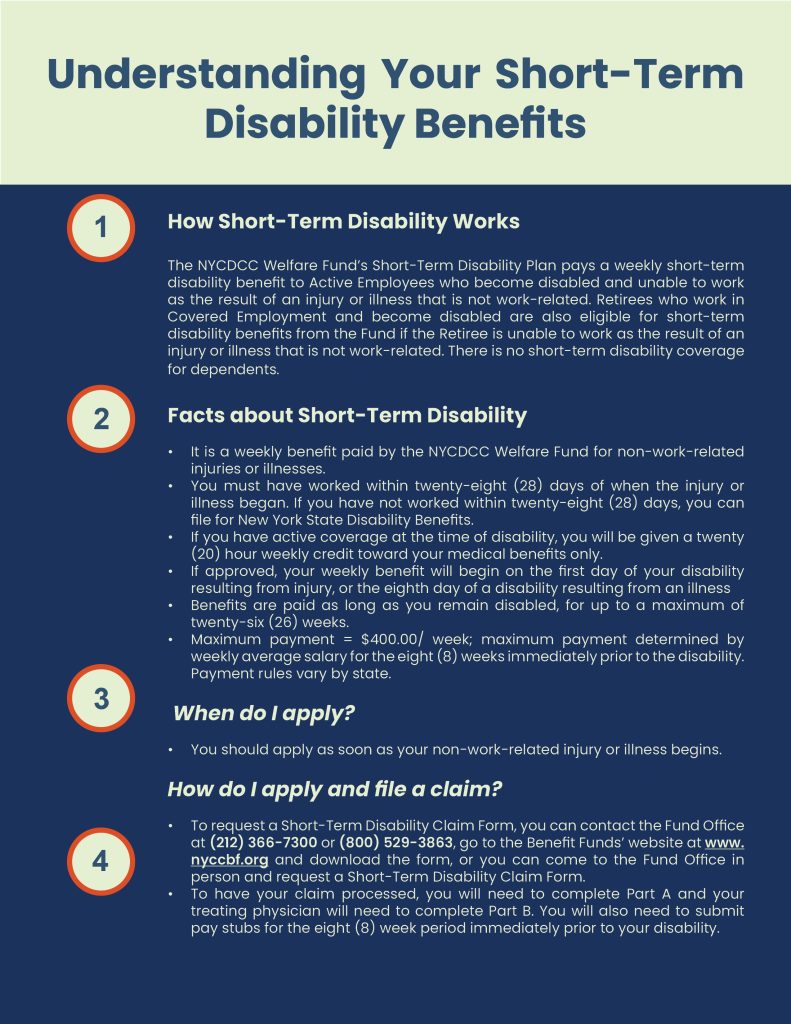
Credit: nyccbf.org
Frequently Asked Questions
How Do I Start Applying For Disability Benefits In New York?
Begin by gathering medical records and proof of disability. Then, visit the New York State Office of Temporary and Disability Assistance website to complete the application online or request a paper form.
What Documents Are Needed For New York Disability Benefits?
You need medical reports, proof of identity, Social Security number, and employment history. These documents support your claim and verify your eligibility.
How Long Does New York Disability Application Processing Take?
Processing usually takes 3 to 5 months. Delays can occur if additional information or medical exams are required during the review.
Can I Appeal A Denied New York Disability Claim?
Yes, you can file an appeal within 60 days of denial. Follow instructions in your denial letter to request a reconsideration or hearing.
Conclusion
Applying for disability benefits in New York takes time and patience. Gather all needed documents before you start. Follow the steps carefully to avoid delays. Ask for help from local offices if you feel stuck. Keep track of your application status regularly.
Stay calm and organized throughout the process. This can improve your chances of approval. Remember, many people get help after trying more than once. Taking action today moves you closer to support. Your effort matters in securing the benefits you need.